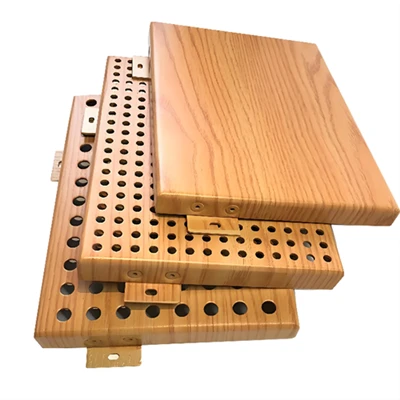

As a key material for suspended ceilings, aluminum panels are increasingly being used in interior renovation. The market is flooded with a wide variety of products, making it challenging for consumers to distinguish quality. Here is a guide to help you select the aluminum ceiling panels that best meet your needs.
1. Check the Thickness: 0.6 mm Is Sufficient
Many consumers mistakenly believe that thicker aluminum panels are always better-this is not the case. Some vendors boast that their panels are 0.8 mm thick, often exploiting the consumer's tendency to equate "thicker" with "better" while simultaneously masking technical flaws. If the raw aluminum material is impure or of poor quality, it cannot be processed into a thin, uniform sheet; instead, the manufacturer is forced to make it thicker.
Tip: The most direct way to verify thickness is to check the product specifications, which should clearly state the dimensions, including thickness. You can also gauge the thickness by sight and touch. Be aware that some products may fall short of the required thickness, with manufacturers applying an extra layer of coating to the surface to meet the specified measurement-examine these carefully.
2. Evaluate the Craftsmanship: Surface Treatment Is Crucial
Surface treatments for aluminum panels generally include spraying, roller coating, and lamination (film coating). Sprayed panels often have a shorter lifespan and are prone to color inconsistencies. Roller-coated panels feature a uniform, smooth surface, free from missed spots, pinholes, scratches, or peeling. Laminated panels are covered with a PVC film; a high-quality version will have a firmly bonded surface, free from wrinkles, scratches, peeling, or gaps in the film.
Tip: When shopping, use your hands to feel whether the surface is smooth and refined. Exercise extra caution with laminated panels: because the lamination process requires high precision, if the film is applied manually, it may peel off when exposed to significant temperature fluctuations.
In essence, the "craftsmanship" refers to how the surface layer is bonded to the panel-a detail that consumers frequently overlook. Manufacturing quality has a significant impact on the service life of a product. There is a wide disparity in processing techniques among aluminum ceiling panel manufacturers; many smaller, workshop-style operations produce panels with a shorter lifespan, so it is essential to research this carefully before making a purchase.
3. Choosing the Material: Titanium-Aluminum Alloy is Superior
Aluminum ceiling panels are generally categorized by their alloy composition, including titanium-aluminum, aluminum-magnesium, aluminum-manganese, and standard aluminum alloys. Aluminum-magnesium alloys offer excellent oxidation resistance, while aluminum-manganese alloys provide superior strength and rigidity-though with slightly lower oxidation resistance than the magnesium variant. Standard aluminum alloys, containing lower levels of magnesium and manganese, are weaker in terms of strength, rigidity, and oxidation resistance. Titanium-aluminum alloy panels combine the advantages of the aforementioned types while also offering strong resistance to acids and alkalis, making them the ideal choice for long-term use in kitchens and bathrooms.
Tip: To evaluate the quality of an aluminum panel, check for uniform thickness, as well as elasticity and toughness. You can test a sample by bending it by hand: lower-quality aluminum will bend easily and fail to return to its original shape, whereas high-quality aluminum will exhibit a degree of spring-back.
4. Installing the Framework (Keels): "Snowflake" Galvanized Finishes Indicate Higher Quality
Aluminum ceiling frameworks (keels) can be made of light-gauge steel or wood, with installation methods ranging from combinations of light-gauge steel and wood to light-gauge steel paired with threaded-rod hangers. Because wooden keels are prone to moisture-related deformation and offer poor fire resistance, it is generally recommended to use a system consisting of light-gauge steel keels and threaded-rod hangers. High-quality light-gauge steel keels are galvanized, resulting in a surface pattern that resembles snowflakes-often referred to as "snowflake-patterned" steel.
Tip: The surface treatment of the keel is particularly important. When purchasing a ceiling system, check for this "snowflake" galvanized finish; a clear snowflake pattern, a rigid feel, and tight, precise joints are all indicators of a high-quality keel.